+(47) 23 89 88 63
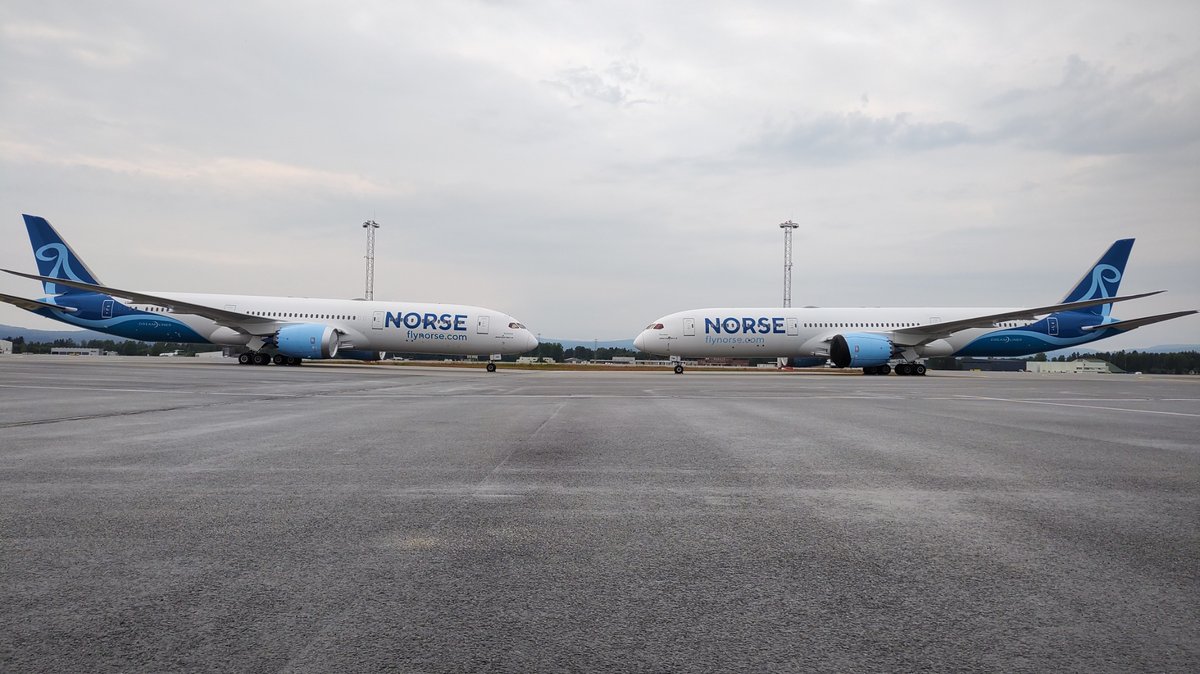
On Friday 27 November 2026, Norse Atlantic Airways AS, the Norwegian operating company of the airline Norse, filed for bankruptcy. All flights have been cancelled and ticket sales have been halted. The filing does not cover the parent company or the UK subsidiary.
In brief
- On 27 November, the board of Norse Atlantic Airways AS filed for bankruptcy at the Agder District Court (“Agder tingrett”). All flights were cancelled and ticket sales stopped.
- Debt stands at USD 647 million (NOK 6.3 billion), against assets valued at USD 411 million (about NOK 4 billion). The court found the company insolvent.
- The bankrupt company had 304 employees. Unpaid wages can be claimed from the state wage guarantee scheme (“Lønnsgarantiordningen”), run by NAV.
- The parent company Norse Atlantic ASA and the UK subsidiary are not covered by the bankruptcy filing.
- Passengers: the best route is usually a chargeback claim with your bank if you paid by card.
Sources: Norse stock exchange announcement, E24, TTG, Skift, CNBC.
Bankruptcy after three days of crisis
According to the stock exchange announcement published at 14:00, the board of Norse Atlantic Airways AS decided on 27 November 2026 to file for bankruptcy at the Agder District Court (“Agder tingrett”). The company said all Norse flights have been cancelled and ticket sales discontinued.
The filing followed three days of rapidly escalating crisis. CNBC notes that on Wednesday Norse shares closed 85% lower in Oslo after the company warned that its financial position was “critical”. On Thursday the carrier suspended all flights and warned it might have to file for bankruptcy.
The immediate cause was the termination of aircraft lease agreements. According to TTG, the aircraft were seized on Friday morning. Norse did not own any of its aircraft, and all of them will return to the lessors.
“Despite extensive efforts, the company has so far been unable to secure sufficient financing to cover its short-term liquidity needs”, the company said in its announcement. “We deeply regret the impact this has on our passengers, employees and partners”, said Norse CEO Eivind Roald.

Read also: TRANSPORT | NORWAY’S BUDGET AIRLINE FLYR AS FILE FOR BANKRUPTCY
NOK 6.3 billion in debt and “a large bankruptcy by Norwegian standards”
The Norwegian business news site E24 obtained the court ruling. It shows the company has debts of USD 647 million (NOK 6.3 billion) and assets valued at USD 411 million (NOK 4 billion). The court found that the payment difficulties are not temporary and that the company is insolvent.
The court appointed Håvard Wiker, a partner at the law firm Ro Sommernes, as bankruptcy trustee (“bostyrer”). “This is a large bankruptcy in Norway”, Wiker told E24. He added that the estate will not continue flights under the Norse name.
The bankruptcy does not cover the whole group. According to E24, the Norwegian company operated seven aircraft, while the remaining five belonged to the UK-based Norse Atlantic UK. The parent company Norse Atlantic ASA, listed in Oslo, is looking for a solution that would allow the UK subsidiary to keep operating.

304 people out of work
According to E24, citing the Proff.no register, the bankrupt company employed 304 people. Staff were informed at a meeting on Friday at 14:00. According to its latest annual report, the whole Norse group had slightly more than 1,000 employees at the turn of 2025 and 2026 (E24). The bankruptcy concerns only the Norwegian company, which had 304 employees. “The losers will primarily be the employees, and last the creditors who are owed money by Norse”, says Hans Jørgen Elnæs in NRK.
The trustee told E24 he does not yet know whether there is money in the estate for the employees. Costs of the proceedings are covered first, with employees next in line. Unpaid wages can be claimed from the state wage guarantee scheme (“Lønnsgarantiordningen”), administered by NAV.
A model that did not work
Norse was born during the pandemic. The company was founded in 2021 to take over the low-cost long-haul market that Norwegian had abandoned. Its first flight took place in June 2022. Founder and largest shareholder Bjørn Tore Larsen of Arendal leased the Boeing 787 Dreamliners previously flown by Norwegian. Aviation analyst Hans Jørgen Elnæs told NRK about “the best lease prices in history”.
Demand for tickets was not the problem. The French site Air Journal reported in January that Norse’s passenger traffic grew by 26% in 2025, with average load factor at 96%. The problem was costs. “Since the first flight in June 2022, the company has not earned a single krone”, Elnæs told NRK.
Elnæs points to three main causes:
- Competition. Large US airlines earn on more expensive business and premium tickets, which lets them cut economy fares.
- Fuel prices. Qatar’s Al Jazeera calls Norse another victim of the sharp rise in fuel costs following the war in Iran. According to Elnæs, its weak finances did not allow Norse to hedge fuel at fixed prices, as many large airlines do.
- Lack of capital. “You need a bottomless bag of money”, the analyst said.
Why is the model so hard? According to Elnæs, nobody in the world has managed to run low-cost long-haul flying, with either large Dreamliners or smaller aircraft. “Many have tried. No one has succeeded”, he says. In his view Norse had every opportunity to make it, but lacked the capital to withstand market shifts and the geopolitical situation. Asked why large, solid companies have not tried, he answers: “Perhaps because they do not believe in the business model”.
Norse joins a long list of failed carriers in this segment. Air Journal recalls that low-cost long-haul flying has already had several victims, from Primera to Wow Air, while Norwegian withdrew from the market.
No rescue arrived
The company searched for a way out throughout the year. According to Bloomberg, cited by AirlineGeeks, Norse hired JPMorgan Chase to run a possible sale process. According to Business Travel News Europe, the company was at the same time carrying out a rights issue worth USD 110 million. As part of a savings programme it cut 75 administrative positions and moved its headquarters from Arendal to Oslo.
Another blow was the decision by Indian airline IndiGo. One Mile at a Time reported that IndiGo ended its lease agreement, so five Dreamliners were due to return to Norse just before the winter season.
What about passengers?
The Norwegian Consumer Council (“Forbrukerrådet”) advises passengers who still want to travel to look for another connection themselves. An airline in bankruptcy cannot rebook a passenger or carry them. The company itself urged people holding Norse tickets not to go to airports.
According to the Council’s lawyer Thomas Iversen, passengers are in theory entitled to compensation of up to €600 for a cancelled flight, plus a refund of the ticket price. In a bankruptcy, however, the chance of getting that money is slim, because consumers join the queue of creditors. A better route is a claim with the card issuer if the ticket was paid for by debit or credit card. The bank will not cover additional costs, such as hotels at the destination. Travel insurance usually does not cover losses caused by an airline’s bankruptcy. Card claim rules are also described by Forbrukerrådet.
Iversen recommends three steps:
- file a claim with the Norse bankruptcy estate,
- file a complaint with the bank that issued your card and attach your claim to the estate,
- ask the bank to refund the price of the trip.
If you were hit by a delayed or cancelled flight with another airline, see our flight delay compensation page.
What happens next?
The trustee will now establish what assets the company has and who its creditors are. It is unclear how much the lease agreements are worth. “There is a lot of work ahead of us. Basically, we will sell what can be sold”, Wiker told E24. It is also not yet clear whether the parent company and the UK subsidiary will survive.
Events in Norway and Scandinavia
See what is happening in Norway and Scandinavia and plan the coming weeks.
SEE EVENTS »Read also: STRIKEOVER: SCANDINAVIAN AIRLINES SAS AND PILOT’S UNIONS REACHED AN AGREEMENT
What this means for you
- Hold a Norse ticket? Do not go to the airport. Buy a new ticket with another carrier.
- Paid by card? File a claim with your bank without delay, because chargeback deadlines can be short.
- File a claim with the bankruptcy estate, but do not expect a quick refund.
- Check your travel insurance. It usually does not cover an airline’s bankruptcy.
- Worked for Norse? Report unpaid wages to the trustee and check whether you can be paid from Lønnsgarantiordningen at NAV.
Paying for travel by card?
Compare credit cards in Norway: travel insurance, bonuses and lower currency fees.
COMPARE CREDIT CARDS »Was a flight with another airline cancelled or delayed? Check your flight delay compensation options.